How Infrastructure Works
Published 16 May 2024
If you're at all interested in sustainability and/or how the things around you work, you should pick up a copy of How Infrastructure Works: Inside the Systems that Shape Our World by Deb Chachra.
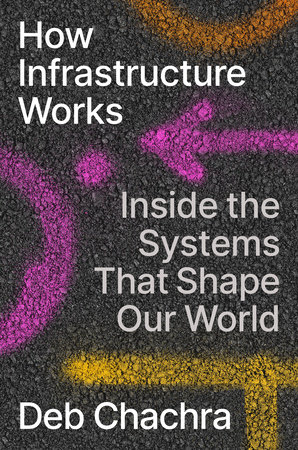
It's an easy read, and gives you some reasons to be hopeful about the state of the world. I know at least for me it can be difficult to think about climate change and not also start thinking "we're doomed". But Chachra makes the case that we are capable of building sustainable infrastructure that can meaningfully reduce emissions and set us up well for the future.
This book is also packed full of interesting details about how things work. And not just the nuts and bolts of how things work, but how those workings directly impacts our lives. She highlights the vastly different ways infrastructure impacts lives based on who has power and who doesn't. One of the biggest revelations for me was just the understanding that infrastructure can literally change lives. It was refreshing to see discussions of culture and power in a book that could easily have been more focused on mechanical workings. Wrestling with what it means to build infrastructure equitably is a huge part of what made this book so compelling to me.
I will leave you with one of many sections I highlighted from this book, as excellent food for thought:
All over the planet, the responsibility for hygiene and food preparation most often falls to women. The highly gendered nature of this labor means that fetching clean drinking water or obtaining fuel to burn for cooking are daily activities for billions of women globally, especially ones who look like me, brown-skinned and middle-aged. They trade their time and the energy of their own bodies to ensure that the most basic needs of their families are met.
My life, as I know it, has mostly been made possible because I had the sheer blind luck of being born into a time and place where my survival needs were met and continue to be met every day by shared infrastructure. What might our world be like if access to these systems were universal?
Back to Thoughts